
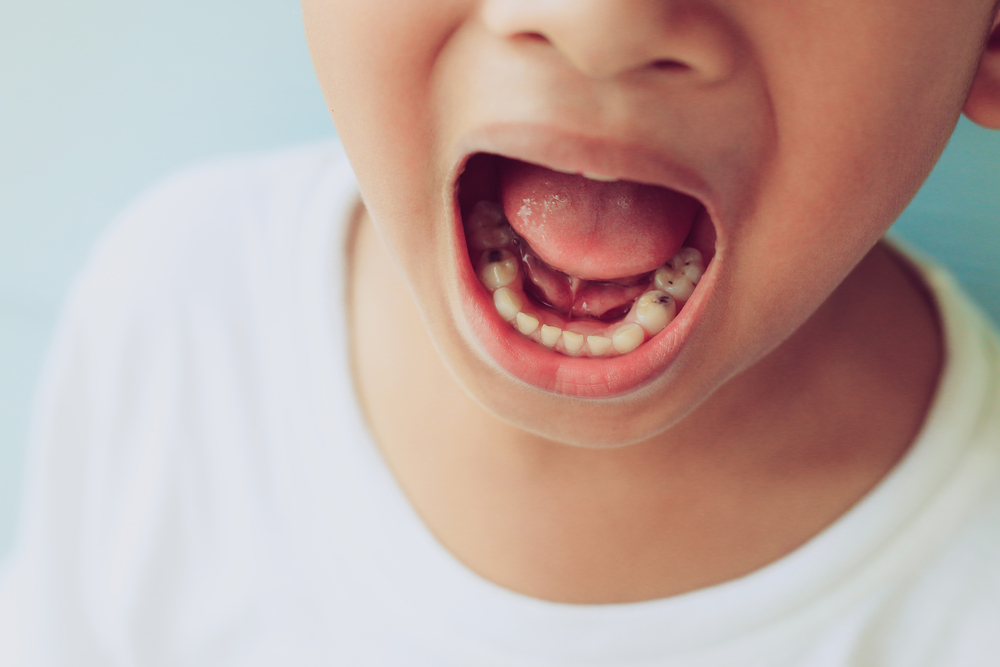
Early signs of cavities can often be spotted by checking your child’s teeth for changes such as white chalky spots, discoloration, or sensitivity. Tooth decay usually begins when enamel starts losing minerals, which may appear as white spots near the gum line.
If not treated early, decay can progress into cavities, discoloration, enamel damage, and tooth sensitivity. Some children may not clearly explain discomfort, but they may avoid certain foods or hesitate while eating.
Watching for these small changes can help parents identify early signs of tooth decay before the problem becomes more serious.
Mild Discoloration Of Teeth
Tooth decay that is forming in your child’s mouth may also show some signs of progressive visual discoloration over time. For example, a tooth that has a cavity forming will likely show visible color changes to the outside of the tooth when it is first developing. Yellowing, brown spots, and dark spots often develop to indicate that there is a cavity forming.
Parents often assume this type of staining is a normal part of tooth development because it appears gradually over time. However, if it is not detected early and evaluated by a dentist, mild tooth discoloration may be one of the earliest signs of a cavity.
It is important to have your child evaluated by a dentist as quickly as possible to minimize the extent of the cavity as well as to protect your child’s dental health.
Persistent Bad Breath
Your child may have persistent bad breath in his or her mouth without the presence of food products as the cause for the odor. If your child’s breath does not seem to improve with proper oral hygiene methods such as daily brushing and flossing of the teeth, he or she may have developed a buildup of bacteria in their mouth.
Due to a constant accumulation of bacteria called plaque that can cause or contribute to gum disease and tooth decay, and also due to the possibility of causing your child to visit the dentist because of persistent bad breath, it is necessary for you to pay attention to your child’s oral health.
In some cases, a toothache can indicate a more severe dental problem that requires professional attention. Persistent bad breath may also be among the subtle early signs of cavities in teeth.
Tooth Pain And Discomfort
Most people do not start having tooth pain with an abrupt severe onset. Most patients will often begin to have some mild or intermittent type of tooth discomfort prior to experiencing more significant levels of discomfort.
Parents should take their children seriously when they complain of any type of oral discomfort while chewing or eating certain types of foods, regardless of how mild or infrequent these complaints may be.
Oral discomfort may be present for some time and may only present when children experience basic oral discomfort. Early indicators of sufficient oral discomfort may suggest the development of cavity formation at the early signs of cavities stage.
Surface Irregularities of the Tooth
Tooth surface irregularities such as chips, pits, or scratches can be places on a tooth where bacteria and food particles can hide. Not removing all of the food and bacteria from these types of areas will ultimately cause further dental decay and damage to the remaining structure of the tooth.
Tooth surface irregularities can also indicate areas of developing decay beneath the surface of the tooth.
Dental checkups with a pediatric dentist can help detect developing cavities prior to them becoming large cavities. Kids face a risk of developing dental caries through certain behaviors and habits that result in risk.
A good approach for parents is to learn about the common causes of their child’s risk for developing cavities, which will provide an opportunity for them to take action and become an advocate for their child’s oral health.
Common Behaviors That Increase Cavity Risk
Some examples of behaviors and habits that result in cavities are:
- High sugar and sugary drink consumption
- Not helping the child develop proper brushing techniques
- Not supporting the child to use dental floss regularly
- Buildup of plaque in hard to clean areas
- Failure to take the child in for regular dentist visits
Being on a bottle for a longer than normal period of time, as well as being allowed to hold a bottle of sweetened beverage at night while sleeping, are both factors that have resulted in an increase in the number of cavities seen in toddlers. These habits may increase the risk of early signs of cavity in toddler and other dental concerns.
How Parents Can Identify Signs of Tooth Decay At Home
Parents can also help identify the early signs of cavities in toddlers by examining their child’s teeth regularly at home.
The following are a few things to look for:
- Good lighting for visibility of your child’s teeth
- White spots or changes in your child’s teeth
- Teeth that appear puckered or bumpy
- Changes in eating habits over time
- Complaints of tooth sensitivity or discomfort in the mouth
Using these simple methods may allow parents to identify issues in a child’s mouth before they advance further.
When Should You Take Your Child to the Dentist?
In addition to home checks, it is critically important to have your child seen by a dentist periodically to ensure any potential issues are accurately diagnosed and properly treated if they occur.
You should take your child to the dentist if:
- He or she has developed a white spot or discoloration on one or more teeth
- He or she complains of pain or sensitivity from a specific tooth
- Has bad breath for longer than 2 days even after brushing
- Has one or more visible pits or holes on their teeth
- Their last appointment was 6 months ago or longer
In addition, routine professional cleanings and checkups will help provide your child with the opportunity to have plaque removed and will help limit the number of new cavities from developing.
How to Treat Cavities Early
It is less complicated to treat cavities early on, making it easier for the child to be treated for a cavity.
Some of the most common treatments for cavities in children during their early development stages are as follows:
1. Fluoride Treatment
Fluoride helps strengthen the enamel on the teeth. Fluoride also helps reverse early tooth decay if applied during the beginning stages of the tooth’s decay.
2. Sealants
Sealants are used to coat the surfaces of teeth that have a higher chance of developing cavities.
3. Small Fillings
With a small filling, your dentist can fix a cavity that is already present before it has a chance to further decay.
Cavity Prevention Methods for Your Child Good Oral Hygiene
Daily Care of Your Child’s Teeth
- Brush twice daily with fluoride toothpaste
- Floss at least once per day
- Replace your toothbrush regularly
Healthy Eating Habits
- Limit sugary foods and beverages such as candy and soda
- Encourage your child to drink water during meals
- Include lots of fresh fruits and vegetables in your child’s diet
Routine Dental Visits
- Visit the dentist every six months for routine cleanings
- Follow through with routine dental checkups
These daily habits will help build a solid healthy mouth for your child that will last a lifetime and reduce the chances of early signs of cavities developing.
Suggestions for Creating Healthy Oral Hygiene Practices with Your Child
Supporting your child to have good oral hygiene takes time and effort.
There are numerous ways to make your child enjoy brushing their teeth:
- Use a song or a timer while brushing your child’s teeth
- Be present when your child brushes teeth so that they can see proper technique
- Choose a child sized toothbrush and toothpaste
- Incorporate tooth brushing into your child’s nightly routine
- Make sure your child sees you caring for your own teeth in front of them
The more fun dental care is for your child, the more it may help lessen anxiety related to dental visits.
Final Thoughts
One thing that makes cavities difficult to identify in your child, as well as in other people, is the fact that it takes time for cavities to form and they may have subtle changes indicating the initial stages of dental decay.
Watch for the following signs that a tooth may be in the beginning stages of dental decay:
- White spots on the tooth
- Dark spots on the tooth
- Tenderness around the tooth
- Sensitivity to hot or cold beverages
Recognizing these warning signs early can help parents detect the early signs of cavities in teeth and seek treatment before the problem becomes more serious.
FAQs
What are the first signs of dental cavities in kids?
Some warning signs of pediatric dental cavities are white spots on teeth, issues with hot & cold foods (sensitive), color changes, bad breath, and occasional pain in and around teeth.
How do I know if my toddler has a cavity?
Look for changes in eating habits, fussiness during meals, visible white or brown spots, and sensitivity. These are common early signs of cavities in toddlers.
Do cavities heal naturally?
Cavities do not heal naturally. However, cavities caused by very early enamel (tooth) damage can sometimes be reversed through the use of fluoride and dental care, (brush with toothpaste containing fluoride).
What age begins the process of forming cavities in children?
Cavities can begin to form right from the first tooth appears, closeness/addiction to sugar and lack of oral hygiene are significant contributors.
When should I schedule an appointment with the dentist for my children?
Whenever you see the first sign of a cavity or your child is in pain/sensitive to hot/cold foods or there is visible change to the child’s teeth, an appointment with the dentist is warranted.